

Humidity is one of the biggest challenges faced by 3D printing enthusiasts, especially in tropical regions like India. High moisture levels in the air can affect filament quality, resulting in poor print finishes, inconsistent extrusion and weaker 3D printed models. Knowing how to keep 3D printer filament dry in humid climates is essential for achieving consistent printing results.
Why Does 3D Printer Filament Absorb Moisture?
Most 3D printing filaments are hygroscopic, meaning they absorb moisture from the surrounding air. Materials such as PLA, PETG, ABS, TPU and Nylon react differently to humidity. Moisture trapped inside the filament can produce bubbles, excessive stringing, rough surfaces and poor layer adhesion.
According to Prusa's filament drying guide, moisture-sensitive materials like TPU and Nylon require particular attention during storage and printing.
5 Effective Ways to Keep 3D Printer Filament Dry
1. Store Filaments in Airtight Containers
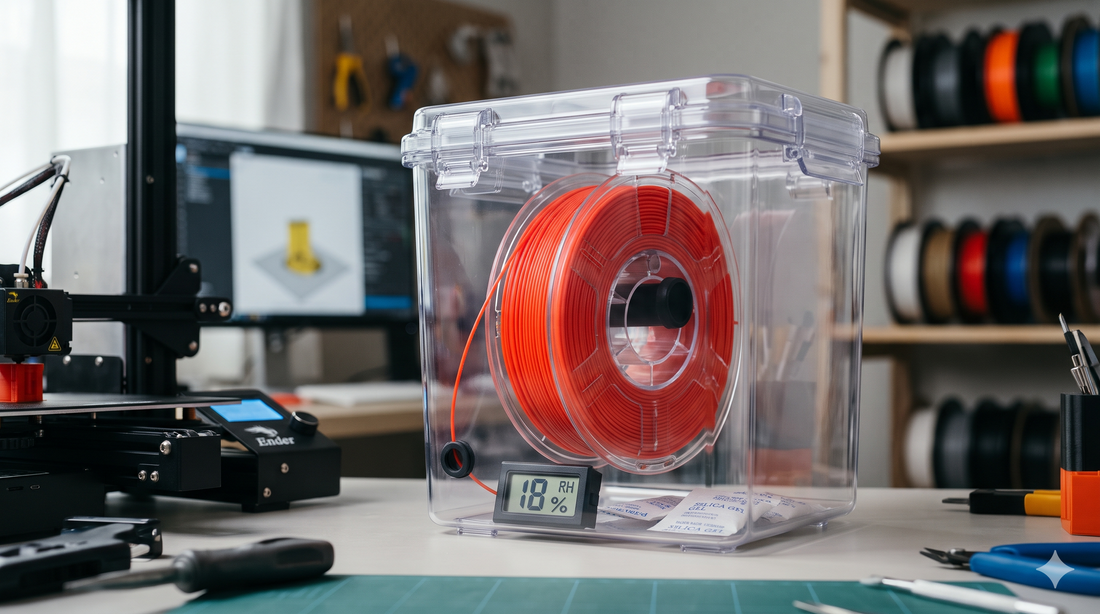
Keep unused filament spools in sealed plastic containers or airtight storage boxes. This reduces exposure to moisture, particularly during monsoon seasons in Chennai and other humid parts of India.
2. Use Silica Gel Desiccants
Place silica gel packets inside filament storage boxes. They absorb excess moisture and help maintain a dry storage environment. Replace or regenerate them periodically.
3. Invest in a Filament Dryer
A dedicated filament dryer removes absorbed moisture using controlled heat. Always follow the manufacturer's recommended drying temperature and duration for each material.
4. Monitor Humidity Levels
Use a digital hygrometer inside your storage box to monitor relative humidity. This helps identify when desiccants need replacement or storage conditions need improvement.
5. Use a Dry Box While Printing
Avoid exposing filament to open air during long printing sessions. A sealed dry box allows filament to feed directly into the 3D printer while minimising moisture absorption.
For additional technical guidance, refer to UltiMaker's material drying recommendations.
How Does Proper Filament Storage Improve Print Quality?
Understanding how to keep 3D printer filament dry in humid climates helps reduce printing failures, improve surface quality, maintain layer strength and extend filament usability. Consistent storage practices are particularly important for professional printing, prototyping and production environments.
Get Better 3D Printing Results with Dimensions 3K
At Dimensions 3K, we help makers, students, entrepreneurs and businesses across India access quality 3D printers, filaments, resins and accessories. Whether you are exploring 3D printing or managing professional printing projects, choosing the right materials and maintaining proper storage conditions can make a significant difference.
Explore Dimensions 3K for reliable 3D printing solutions, expert guidance and products to support your next creation.